
NRFI Betting: Why First-Inning Bets Outperform Full-Game Wagers

Grinding out full MLB games is fine, but sweating bullpen meltdowns and late-game randomness gets old fast. No Run First Inning (NRFI) bets offer a faster, more predictable market. Here's why the first inning is one of the best spots in baseball betting, and how to find sharp NRFI plays without spending your whole afternoon on research.
Why NRFI bets work
The math is simple: MLB innings finish scoreless about 53% of the time, but first innings hit a higher 57–58% scoreless rate. Why? Predictability.
You know exactly who's pitching and hitting at the start of every game. There's no bullpen roulette, no pinch hitters, no double switches. That gives you a cleaner data set to work with than almost any other baseball bet — browse today's MLB props to see how the matchups break down.
The math behind first-inning edges
The first inning is the only part of a baseball game where you have complete predictability of the matchups. You know which three hitters will face the starting pitcher, and that clarity disappears once lineup turns and bullpen decisions take over.
This creates a few patterns worth watching:
-
High-strikeout or groundball pitchers tend to outperform their overall numbers in the first inning. Pitchers like MacKenzie Gore and Tarik Skubal might have decent overall ERAs, but their first-inning ERAs often beat their full-game numbers by 1.00–1.50 runs.
-
The top of batting orders isn't always built to score in the first inning. Many teams slot on-base specialists (rather than power hitters) in the 1–2 spots, which creates favorable NRFI spots even against average pitchers.
-
Fresh pitchers at full strength, before fatigue and mechanical breakdown set in — that's why first-inning scoring is consistently lower than middle-inning scoring across MLB.
This edge gets stronger when you layer in specific pitcher and lineup data.
Takeaway: First-inning bets give you the most predictable matchup data in baseball. Use it.
How NRFI prop cards save you hours
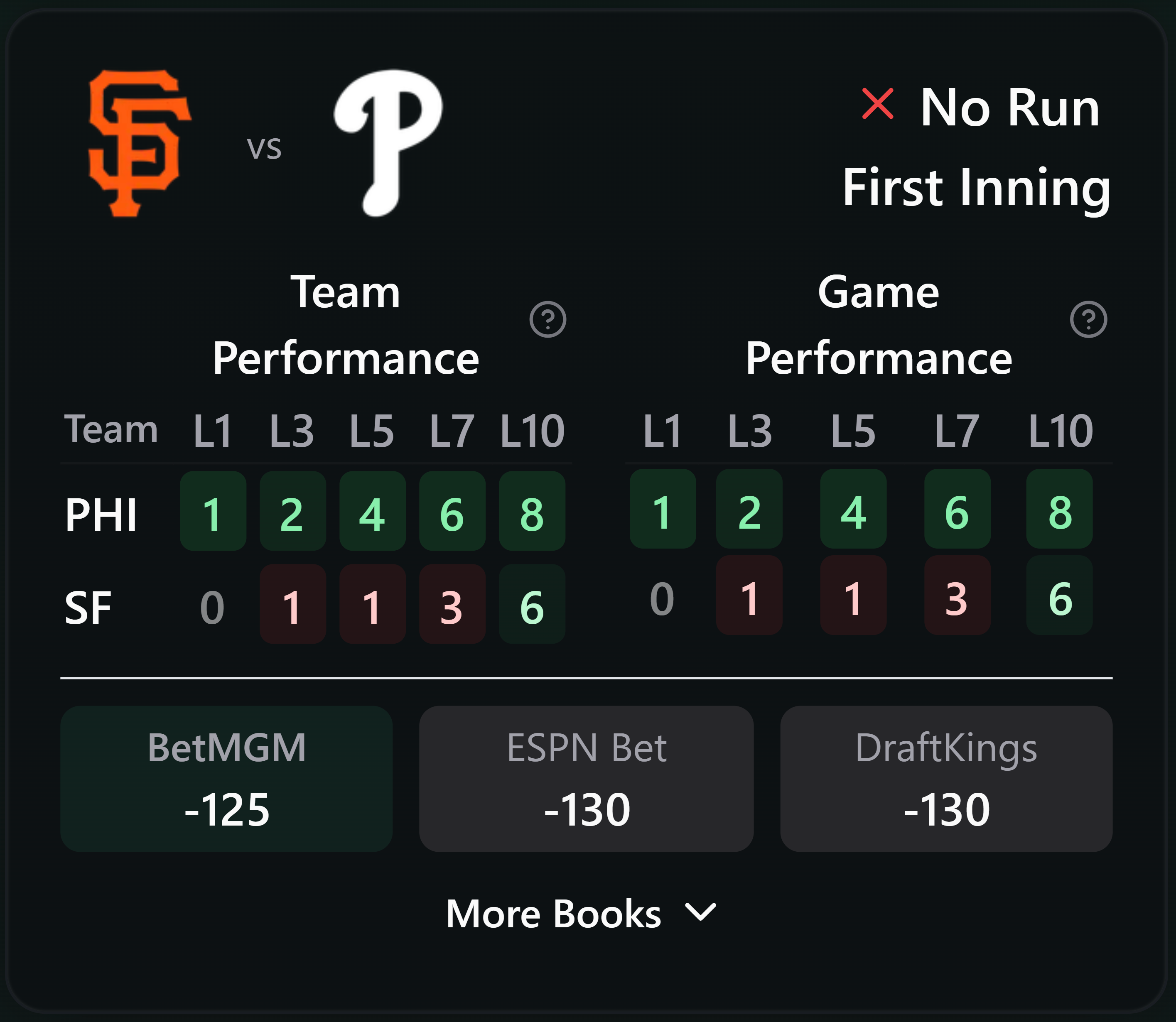
Forget combing through messy stats pages. WagerLens NRFI cards break down each matchup in seconds:
- Team performance in recent first innings, so you can spot hot streaks or cold runs fast
- Game-specific context like lineup shifts that favor NRFI or YRFI bets
- Real-time odds comparison across books like FanDuel, DraftKings, and Pinnacle without leaving the page
Takeaway: One screen, all the data you need. No tab-hopping.
How to spot sharp NRFI plays
-
Hot pitching trends: Target matchups where starters dominate early innings. Look for low first-inning ERAs over the last 5–10 starts, not just season-long numbers.
-
Weak top-of-order bats: Avoid lineups stacked with power at the top. Check recent top-order scoring to skip risky bets.
-
Odds gaps: Compare prices across books. If FanDuel has a NRFI at -102 while Caesars shows -140, that's a clear spot to grab value.
Example: Padres-Diamondbacks cards recently showed Arizona's cold start tendencies. Odds hovered near even money, which suggested value on the NRFI side.
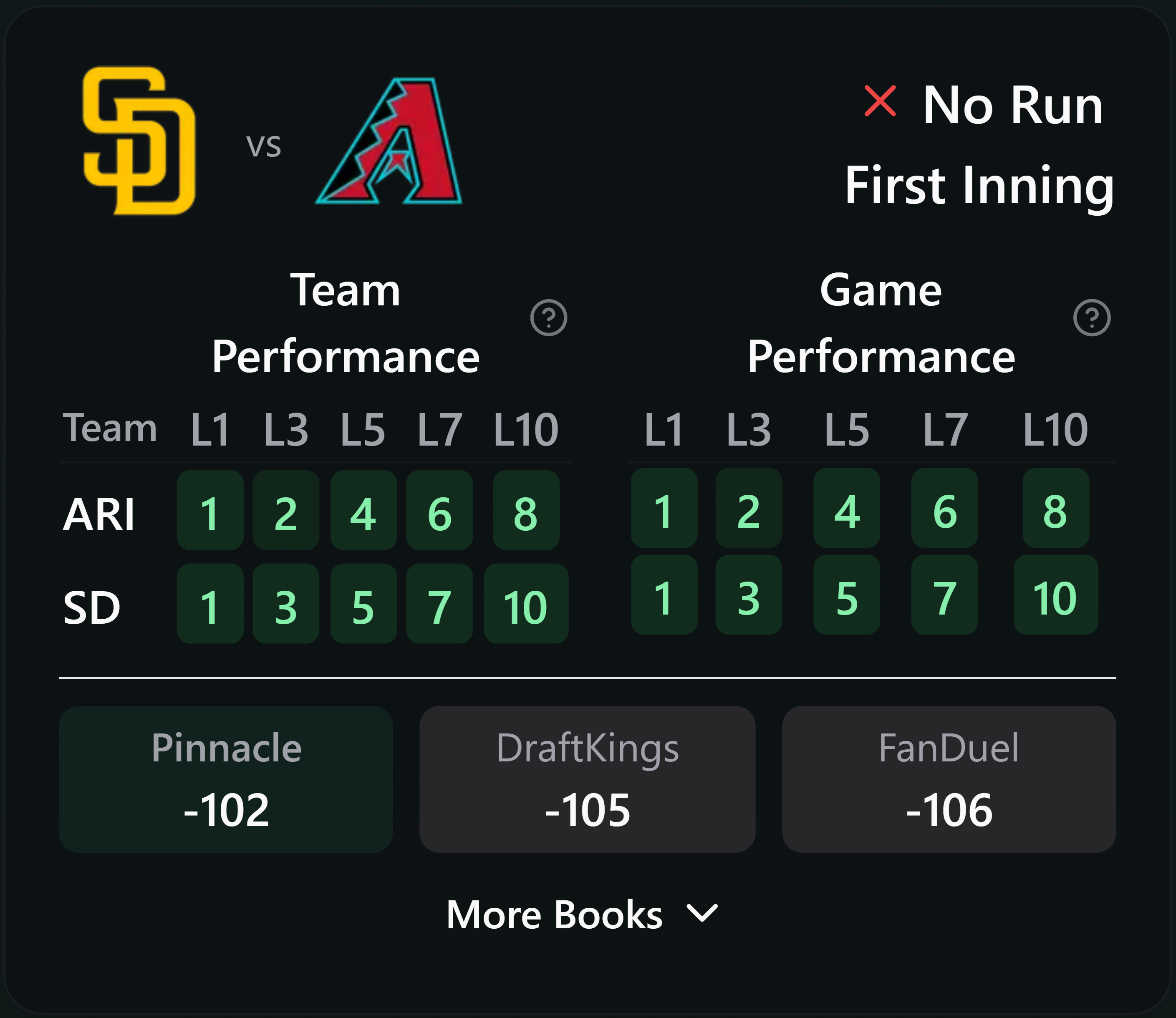
Takeaway: Visual cues and odds comparisons help you zero in on plays without wasting time.
Putting it all together
Before placing an NRFI bet, ask yourself:
- Are these teams scoring early this season?
- Does the starting pitcher have strong first-inning numbers?
- Are the odds priced favorably compared to other books?
NRFI betting is faster and more focused than full-game wagers. You're working with cleaner data, shorter time horizons, and less randomness. WagerLens puts the relevant numbers in front of you so you can make that call quickly.
See it live before you bet
MLB props with best prices, hit rates with sample sizes, and a public track record.
- Every pick graded — wins and losses, no filters
- Hit rates for the exact line and recent windows
- Sportsbook price comparison on free Bet Checks
- Premium adds tracking, history and stats, and alerts
- Public track record with wins and losses