

In sports betting, especially prop bets, you'll often notice the odds on a wager change over time. New bettors see this and wonder, “What does it mean when the price of a prop changes?”
This post covers what a prop bet is, how odds (the “price”) work, why those odds move, and what that movement can tell you. We'll include practical tips and examples from MLB, NBA, and NFL markets.
What is a prop bet?
A prop bet is any wager on a specific event or statistic within a game that isn’t tied to the final score. Instead of betting on who wins, you bet on smaller “propositions.” These could be:
- Player Props: Stats like an NFL quarterback’s passing yards or an MLB pitcher’s strikeouts.
- Team Props: Outcomes such as which team scores first or how many 3-pointers a basketball team will hit.
- Game Props: Situations like “Will the game go into overtime?” or “Will there be a run scored in the first inning?”
Prop bets add extra excitement to games by letting you bet on these specific happenings rather than just the final score. They are very popular in leagues like the NFL, NBA, and MLB because they allow fans to engage with individual performances from their favorite players or quirky outcomes throughout the game.
What does “price” mean in betting odds?
In betting, the “price” is simply the odds. These odds show both how likely the sportsbook thinks an outcome is and how much you can win.
- Positive odds (e.g., +150): You risk $100 to win $150. These usually indicate the less likely outcome.
- Negative odds (e.g., -120): You risk $120 to win $100. These usually indicate the more likely outcome.
So, if a prop is listed at -120, it’s a favorite. If it’s +150, it’s an underdog. The price tells you the potential payout and gives a clue about how the sportsbook views the bet. Compare both sides with the vig calculator to see how much juice is built into those prices.
Why do prop bet prices move?
Odds aren’t fixed. They move based on what’s happening in the betting market and in the real world. Here are the main drivers:
- Betting Volume: Sportsbooks want balanced action. If too much money comes in on one side, they’ll make that side less attractive and sweeten the other.
- Player News and Injuries: A lineup change, injury, or rest day can quickly shift odds. If a star is out, related props may move immediately.
- Sharp Money: Professional bettors influence odds. If they hammer one side, sportsbooks adjust quickly, even if the total money isn’t huge.
- Weather and Conditions: Outdoor sports can swing with the forecast. Rain, wind, or even ballpark wind patterns in baseball can shift props.
- Timing: Odds move more as game time approaches. Opening lines are based on projections. Closing lines reflect the full weight of news and betting action.
What price movement can tell you
Line movement is the market talking. Here’s what it can tell you:
- Heavy Action: Big shifts often signal lots of bets or sharp money.
- New Information: Sudden swings can point to lineup changes, weather shifts, or breaking news.
- Smart Money: Consistent movement in one direction often shows where experts are betting.
- No Guarantees: Movement reflects probability, not certainty. Upsets happen.
Pay attention to these signals. If you already bet a prop and the odds move in your favor (making your side less attractive to new bettors), that’s a good sign you got value. If it moves against you, ask what you might have missed. For beginners, just knowing something caused the move is enough reason to dig deeper before following the crowd.
Examples of prop price movement in MLB, NBA, and NFL
Let’s look at a few hypothetical examples across major sports to illustrate how and why a prop bet’s price might change:
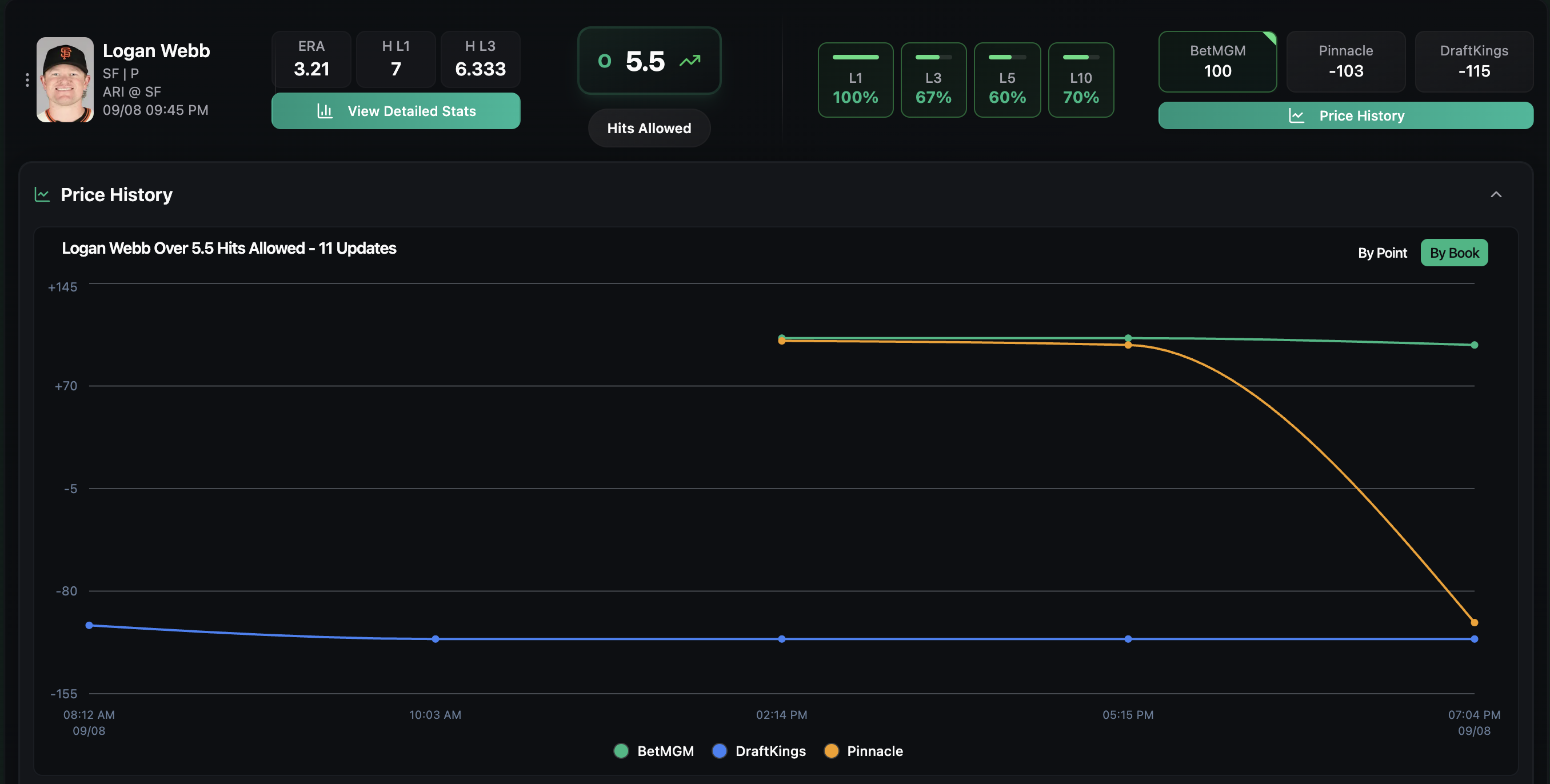
MLB Example: You bet “Over 5.5 hits allowed for Logan Webb” at +105 in the morning. By game time, it’s -115. The lineup might have shifted or bettors piled on the Over. As an early bettor, you got a better price than those who came later.
NFL Example: A running back’s rushing yard prop opens at 53.5 yards, -110. Later, a weather forecast calls for heavy rain and a defensive lineman is ruled out. Bettors jump on the Over, and the price moves to -125, maybe even raising the line to 65.5 yards. Early bettors got value, late bettors pay more for the same angle.
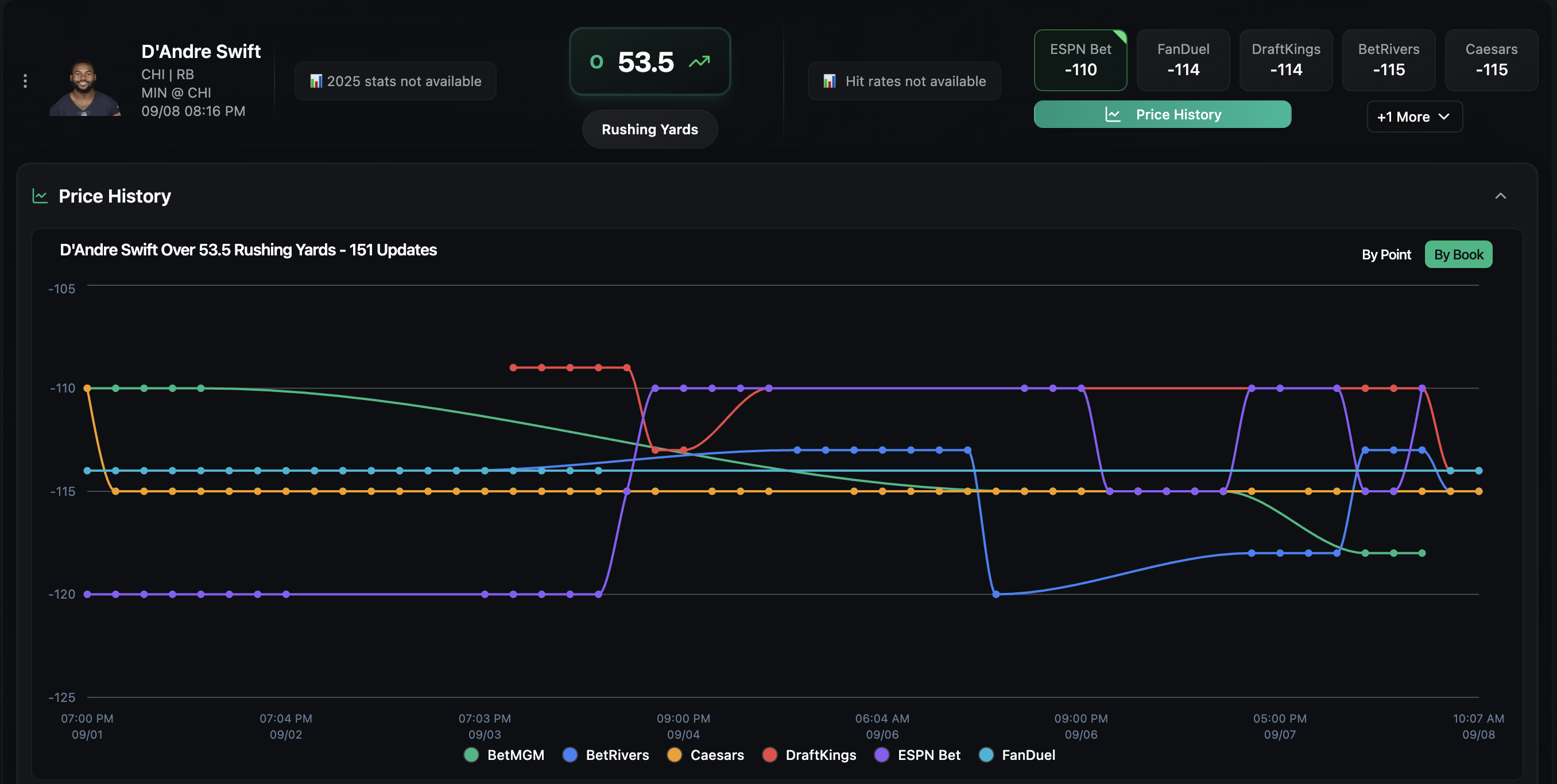
These examples across MLB and NFL highlight common scenarios that cause prop odds to move: lineup changes, injuries, weather, or simply a surge of bets on one side. Always pay attention to context around a line move, it usually points to why the price is changing.
Tips for beginners: how to respond to line movement
If you’re new to betting, here’s how to handle it when you see prop prices moving:
- Don’t Chase Steam: If you missed the best number, resist betting it late at worse odds. The value may be gone.
- Shop Around: Different books move lines at different speeds. Always compare and grab the best price.
- Stay Informed: Follow injury reports, weather updates, and news. The fastest bettors often get the best numbers.
- Ask Why: If odds shift, pause and figure out what changed. Was it news, sharp money, or just public action?
- Keep Perspective: Line moves don’t guarantee outcomes. Stick to your analysis and value-based decisions.
Putting it together
Prop bet prices move because sportsbooks are reacting to betting action and new information. That’s normal, and it actually gives you clues about what’s happening in the market.
Understand what odds represent, pay attention to why they move, and don’t chase numbers once the value is gone. The best way to build a feel for this is to watch it happen — browse today’s NBA props or MLB props to see live odds and movement in action.
See it live before you bet
Compare prices before you decide whether a number is worth playing.
- Every pick graded — wins and losses, no filters
- Hit rates for the exact line and recent windows
- Sportsbook price comparison on free Bet Checks
- Premium adds tracking, history and stats, and alerts
- Public track record with wins and losses